ASCO 2024
10th and 11th July 2024, Sandton Convention Center, Johannesburg, South Africa
Key benefits for attending:
• Discover how leveraging the AfCFTA can enhance trading preferences across all sectors, fostering seamless integration and maximising opportunities for growth.
• How to restructure your Supply Chain infrastructure to move goods from local to global customers
• Stay informed about industry trends and regulations and establish robust policy frameworks.
• Explore Transport Management System (TMS) and technology trends for 2024.
• What systems can facilitate the integration of supply chain data with broader ESG data to scale Scope 3 accounting and reporting?
• Use data-driven insights to inform decision-making and enhance responsiveness to changing market conditions.
• How to tackle blind spots through your supply chain command center
• Reviewing the key principles of the Public Procurement Bill framework
• Leveraging AI-driven insights to drive strategic procurement decisions and efficiency across the source-to-pay process.
• Navigate the complexities of international trade by getting strategies for imports and exports
Who should attend?
• Chief Executive Officers (CEO)
• Chief Operating Officers (COO)
• Chief Supply Chain Officers (CSCO)
• Chief Procurement Officers (CPO)
• Chief Logistics Officers (CLO)
• Chief Financial Officers (CFO)
• Vice Presidents, Directors, and Heads of:
-Supply Chain
-Logistics
-Procurement
-Warehouse
-Operations
-Inventory
-Transportation
-Distribution
-Purchasing
-Materials
-Demand Planner
-Operations
-Distribution

Agenda
This session will help you capitalise on these opportunities and strengthen your supply chain linkages to play a more prominent role in the global marketplace.
• Can Africa become the global supply chain powerhouse?
• Trading under preferences to support cross-border value chains: What can the AfCFTA contribute? All sectors
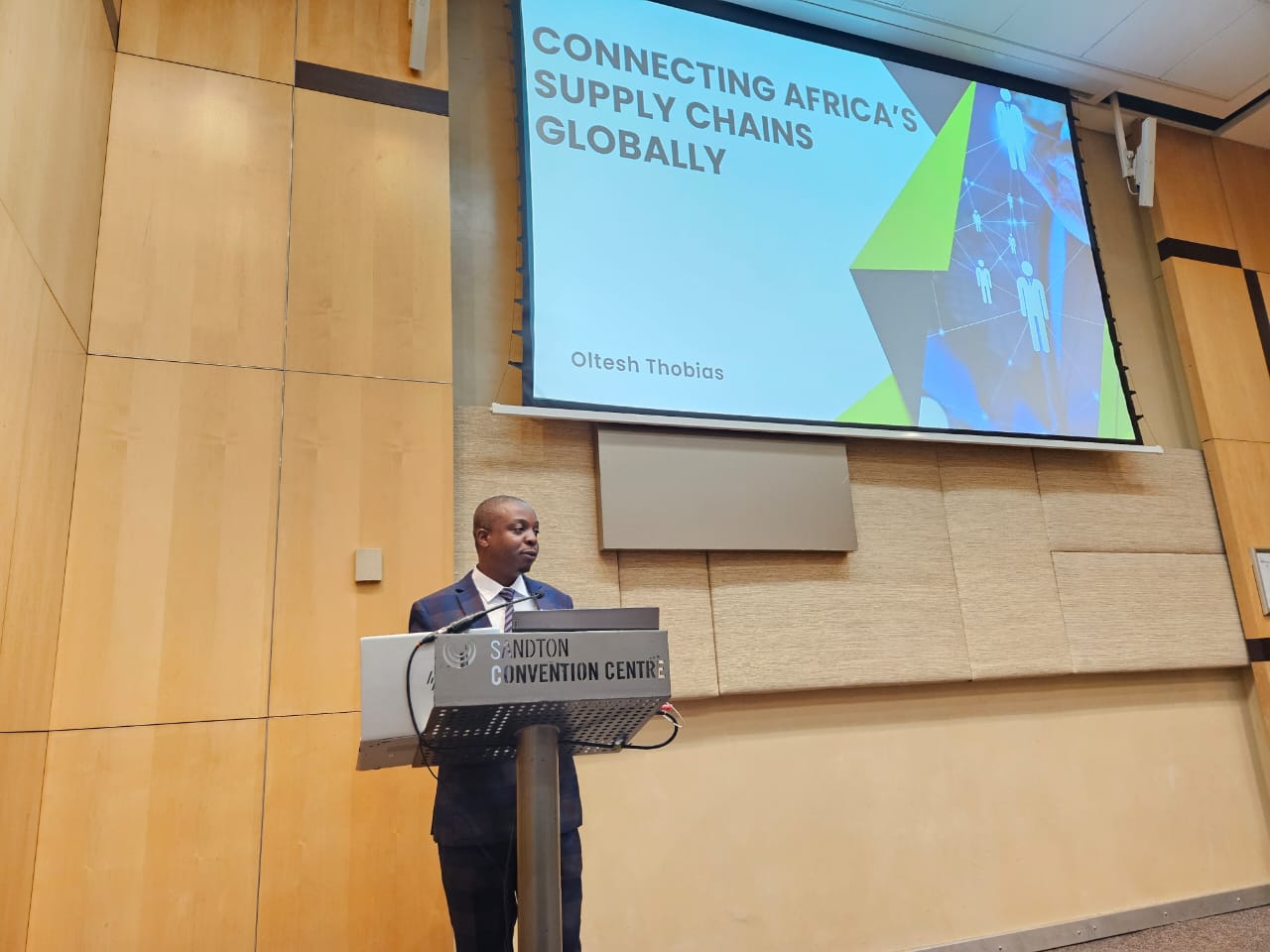
• Restructuring your Supply Chain infrastructure to move goods from local to global customers
Speaker: Oltesh Thobias, Chief Regional Procurement Officer, African Development Bank
This session will show you how to enhance efficiency through innovation and foster collaboration with stakeholders towards sustainable growth in the forthcoming year.
• How to understand the transportation market forecast and create your preparation plan.
• Taking a resilient approach to logistics risk management to help overcome disruptions challenges and maintain continuity within your operations.
• Stay informed about industry trends and regulations and establish robust policy frameworks.
• Integrate robotics and automation in dry ports to streamline cargo handling and transportation to enhance overall operational efficiency.
• Implement dynamic routing with AI-based traffic management to optimises train schedules, manage congestion, and allocate resources efficiently, enhancing your overall rail operations.
• Improve collaboration through digital platforms by connecting dry port and rail stakeholders with information sharing and coordination to enhance your supply chain efficiency.
• Will renewable energy sources power distribution centres? And could electric vehicles replace conventional trucks, aligning the supply chain with global sustainability standards?
Moderator: Simba Msonzah, Principal Advisor and Author, iamsimba.co.za
Speakers:
-Trevor Nghonyama, Head of Logistics, Mccain
-Anton Nieuwoudt, Regional Supply Chain Operations Integration Manager, Epiroc
This session will focus on how businesses can integrate more eco-friendly practices into their operations, ensuring compliance while also meeting the rising consumer demand for sustainability.
• Staying informed about the rapidly changing legislative and regulatory frameworks in relevant jurisdictions that you operate in.
• How can businesses effectively implement eco-friendly practices, such as reducing carbon emissions and responsibly sourcing materials, to mitigate their environmental impact?
• How can businesses ensure fair labour practices, safe working conditions, diversity, inclusion, and community support within their supply chains?
• What types of technology are typically leveraged to trace the journey of a product or raw material from start to finish, and ensure that ethical, sustainable practices are maintained throughout?
• What systems facilitate the integration of supply chain data with broader ESG data to scale Scope 3 accounting and reporting?
Moderator: Simba Msonzah, Principal Advisor and Author, iamsimba.co.za
Speakers:
-Lethabo Tsatsi, Supply Chain Director, PepsiCo
-Kamogelo Mampane, Chairman, Supply Chain Council
-Bernard Vilakazi, Sector Specialist: Transport & Logistics, ABSA
This session will focus on the critical considerations and challenges involved in implementing scenario planning approaches to enhance supply chain resilience and agility in the face of uncertainty.
• Implement proactive strategies by deploying automated planning systems to prepare for anticipated external changes by identifying potential risks, ensuring readiness and agility in the face of uncertainty.
• Utilise advanced forecasting techniques to predict demand, explore new markets, and assess growth opportunities, enabling proactive decision-making and room for expansion.
• Use data-driven insights to inform decision-making and enhance responsiveness to changing market conditions.
• Optimise supply chain performance through simulation modelling, allowing for testing of different strategies and scenarios in a risk-free environment.
• Use metrics such as revenue, cost, service availability, and efficiency to achieve desired business outcomes and enhance overall performance.
• Maximise resource allocation by using AI algorithms to optimise resource allocation within dry ports, minimise idle time and maximise productivity through demand pattern analysis.
Speaker:
-Dawid Janse Van Rensburg, Managing Director, Incremental Profit
• Enable integrations with tracking and ERP for a single point of control.
• Increase your transparency with comprehensive visibility of shipment status and location ensures accountability for carriers and drivers, strengthening trust with partners, customers, and stakeholders.
• Streamline transportation planning and execution, along with the reduction of manual tasks and paperwork for better resource allocation and utilisation.
• Enable your driver force with mobile application for task management to enable real-time feedback like electronic proof of delivery.
Speaker
-Renko Bergh, Co-Founder Expansion & Strategy, CtrlFleet
• What are the challenges in Supply Chain Management
• What is the future outlook for public sector supply chains?
- What skills and capacities are essential for success in the public sector?
• How is the mental health and wellness of public sector professionals being addressed?
Speaker:
-Mmatshepo Rasebopye, Director Supply Chain Management, Gauteng Provincial Legislature
This session will empower Chief Procurement Officers to navigate a new era of procurement, focusing on value creation across the supply chain.
• Reviewing the key principles of the Public Procurement Bill framework
• Diversify suppliers and sourcing options for resources by establishing backup suppliers / sourcing channels to during disruptions.
• Seek win-win solutions, by striving for agreements beneficial to all parties involved.
Moderator: Simba Msonzah, Principal Advisor and Author, iamsimba.co.za
Speakers:
-Minkie Motsai, Procurement Director, Mondi South Africa
-Saeed Ande, Procurement & Operational Planning Director, Lafarge Nigeria
-Jatheen Desai, Procurement Logistics Director – Africa, AB InBev
This session is dedicated to exploring pivotal strategies aimed at overcoming prevalent challenges hindering effective supplier collaborative planning. By addressing these obstacles head-on, organisations can elevate their collaborative planning efforts to new heights, unlocking greater efficiency and resilience in their supply chain operations.
• Establish clear and open lines of communication with suppliers to facilitate collaboration and information sharing.
• Utilise digital platforms and tools for real-time communication and data exchange.
• Collaboratively develop planning processes and workflows with suppliers to align on demand forecasting, inventory management, and production scheduling.
Moderator:
Speakers:
-Dr Molefe-Isaac Fani, Divisional Commander – SCM, South African Police Services
-Azuka Okeke, Chief Executive Officer, Africa Resource Center for Excellence in SCM Nigeria
-Gcobisa Mashegoana, Head of Procurement and Supply Chain Management, Eskom
This session will delve into the critical importance of seamlessly integrating supply chain systems with e-commerce platforms.
• How to effectively implement seamless integration between supply chain systems and e-commerce platforms to enable real-time inventory management and order tracking?
• How can demand forecasting techniques be effectively utilised to align supply chain operations with consumer purchasing trends and e-commerce dynamics?
• Which ways can businesses prioritise the construction of diversified and resilient supply chains to effectively manage national distribution footprints and cross-border logistics?
• What are the key benefits of investing in technology and infrastructure upgrades to facilitate the integration of supply chain systems with e-commerce platforms?
Speaker:
-Godfrey Rantshabeng, Head of Supply Chain, Botswana Agricultural Marketing Board
In this session, we will explore strategies and solutions to empower businesses to navigate the intricacies of international trade with confidence and success.
• How to identify market trends in different regions that affects the markets that you are operating in or planning to enter?
• How to manage documentation in import/export operations?
• Adhering to the standards and trade regulations to avoid delays, penalties and disputes
• How to make customs clearance easier for international shipping?
What are the best ways to build relationships with customs officials?
• How can you identify the best import/export software and tools for your company?
Speaker:
-Donald McKay, Chief Executive Officer, XA
event gallery




post show report
Discover the insights and outcomes from our recent event by downloading the Post-Show Report. This comprehensive document provides a detailed overview of key discussions, presentations, and networking opportunities that took place.
What's Inside:
-Event Highlights
-Recap of major sessions and keynote addresses.
-Speaker Insights: Key takeaways from industry leaders and experts.
-Future Trends: Predictions and trends identified during the event.
Stay informed and gain valuable knowledge to enhance your strategies and operations. Simply click the link below to download your copy of the Post-Show Report.
What's Inside:
-Event Highlights
-Recap of major sessions and keynote addresses.
-Speaker Insights: Key takeaways from industry leaders and experts.
-Future Trends: Predictions and trends identified during the event.
Stay informed and gain valuable knowledge to enhance your strategies and operations. Simply click the link below to download your copy of the Post-Show Report.